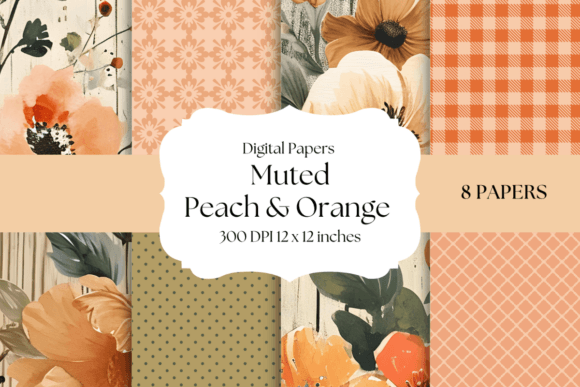
Evaluating Muted Peach and Orange Backgrounds for Digital Craft Projects
In the realm of digital design, particularly within scrapbooking, card making, and social media content creation, the choice of background texture sets the tone for the entire composition. While bold, high-contrast palettes have their place, there is a growing preference for subtlety and warmth that allows foreground elements to take center stage without visual competition. This is where Muted Peach and Orange Backgrounds enter the conversation as a sophisticated alternative to standard neutrals or vibrant primaries. Specifically, collections featuring 8 to 12-inch by 12-inch patterns at 300 DPI offer a versatile toolkit for creators seeking understated elegance.
The appeal of this specific color family lies in its psychological impact and aesthetic flexibility. Peach and orange tones are inherently warm, evoking feelings of comfort, nostalgia, and approachability. However, when these hues are "muted"—desaturated and softened—they lose the potential for visual aggression often associated with bright oranges. Instead, they provide a canvas that feels refined and modern. For professionals and hobbyists alike, understanding how to leverage these backgrounds effectively requires looking beyond simple color selection to consider texture, pattern complexity, and integration with other design elements.
Defining the Aesthetic: What Makes This Collection Distinct?
At its core, a collection of Muted Peach and Orange Backgrounds is defined by its restraint. Unlike solid white or stark black backgrounds that can feel sterile or harsh, muted peach tones introduce a gentle warmth that mimics natural lighting conditions. The distinction between a standard peach background and a sophisticated, muted version often comes down to saturation levels and undertones. High-saturation peach can sometimes read as artificial or dated, reminiscent of early web design trends from the late 1990s. In contrast, muted variations incorporate gray or brown undertones that ground the color, making it feel more organic and timeless.
The inclusion of delicate patterns further elevates this category. A flat solid color, while useful, can lack depth. By introducing subtle textures—such as faint linens, soft watercolor washes, or geometric micro-patterns—the background gains dimensionality without overwhelming the viewer. The specification of 300 DPI ensures that these textures remain crisp even when printed at large sizes, which is critical for physical craft projects like scrapbook pages or greeting cards. For digital-only users, this resolution guarantees sharpness on high-density displays, ensuring that no pixelation detracts from the perceived quality of the work.
Furthermore, the versatility of this palette allows it to bridge multiple design styles. It can serve as a neutral backdrop for minimalist designs, much like beige or taupe would, but with added character. Simultaneously, it pairs exceptionally well with bohemian, vintage, or romantic aesthetics due to its inherent warmth. This dual capability makes it a valuable asset in a designer’s library, reducing the need to purchase multiple disparate color families.
Comparative Analysis: Muted Tones vs. Alternatives
When evaluating digital backgrounds, creators often face a choice between three main categories: cool neutrals (grays, whites, blues), earth tones (browns, greens, tans), and warm pastels (peach, coral, soft orange). Each serves a different purpose, and understanding the tradeoffs helps in selecting the right tool for the job.
- Cool Neutrals: Gray and white backgrounds are the most common choices for corporate or clinical aesthetics. They offer maximum contrast for dark text and images. However, they can feel cold or impersonal. Muted Peach and Orange Backgrounds provide a warmer alternative that retains readability but adds emotional resonance. If the goal is to evoke trust and professionalism, cool neutrals may still be preferable. If the goal is to evoke comfort and creativity, the warm palette wins.
- Earth Tones: Browns and deep greens are excellent for rustic or nature-themed projects. They share the "grounded" quality of muted peaches but lean heavily into organic imagery. The tradeoff here is versatility. Earth tones can limit color pairing options if the project involves bright, non-natural colors. Muted peaches, being closer to the red-yellow spectrum, often pair more easily with both cool accents (like teal or blue) and neutral grays, offering broader compatibility.
- Vibrant Colors: Bright oranges and corals demand attention. They are ideal for call-to-action buttons or highlighting key information. However, using them as full-page backgrounds can cause eye strain and obscure foreground content. Muted versions solve this problem by lowering the visual weight, allowing the background to support rather than dominate the composition.
Another point of comparison is the format of the background itself. Some digital assets come as single-tone solids, while others offer complex layered patterns. A collection of 8 distinct 12x12 backgrounds typically includes a mix of both. Solids provide consistency across a multi-page layout, while patterns add variety to individual spreads. The best approach often involves mixing these within a single project to maintain visual interest without chaos. Readers should evaluate whether a collection offers enough variation in pattern density to support this layering strategy.
Practical Applications and Best-Fit Scenarios
Understanding when to use Muted Peach and Orange Backgrounds is just as important as knowing what they are. These backgrounds excel in scenarios where warmth and sophistication are required without the distraction of loud graphics. Here are several practical applications where this collection shines:
- Personal Branding and Blog Headers: For lifestyle bloggers, coaches, or creatives who want to convey approachability and warmth, a muted peach header provides a professional yet inviting first impression. It avoids the sterility of white while remaining neutral enough not to clash with logo colors.
- Scrapbooking and Memory Keeping: Family photos, especially those taken in natural light or during golden hour, benefit from the complementary warmth of peach backgrounds. The background enhances the skin tones in photographs rather than competing with them. Additionally, the delicate patterns can mimic the texture of aged paper, adding a nostalgic feel to family histories.
- Social Media Content: In an era of infinite scrolling, feeds dominated by stark whites or blacks can feel disjointed. A cohesive theme using muted peach backgrounds creates a unified visual identity. When paired with clean typography and minimal imagery, these backgrounds help posts stand out through elegance rather than volume.
- Digital Planners and Journals: Users of digital planning apps often seek backgrounds that reduce screen glare while maintaining a pleasant aesthetic. Muted peach tones are easier on the eyes than pure white, making them ideal for long-form reading or writing interfaces. The 300 DPI resolution ensures that any fine lines or textures in the pattern render sharply on tablets and e-readers.
Evaluation Criteria: Strengths, Limitations, and Decision Factors
No single resource fits every project. When considering a collection of Muted Peach and Orange Backgrounds, it is essential to weigh its strengths against potential limitations. The primary strength is its ability to unify diverse design elements under a warm, cohesive theme. It acts as a glue that binds text, images, and decorative elements together. Furthermore, the inclusion of both solids and patterns offers immediate value, providing options for different scales of design.
However, there are limitations to consider. Color perception varies significantly across devices. A muted peach that appears soft and elegant on a calibrated monitor might look washed out on a mobile phone screen or overly saturated on a print output. Creators must test these backgrounds in their specific workflow environment before committing to a large-scale project. Additionally, while muted tones are versatile, they may not suit projects requiring high-energy or urgent messaging. In such cases, brighter colors are more effective.
Decision factors should also include the specific shades included in the collection. Not all "peach" colors are created equal. Some lean pink, others lean yellow, and some lean toward terracotta. A well-curated collection will offer a range of these variations to ensure compatibility with various image palettes. Readers should examine sample swatches to ensure the undertones align with their typical subject matter. For instance, if you frequently photograph fair-skinned subjects, a peach background with strong pink undertones might create unwanted color casts. Conversely, a peach with yellow undertones may complement a wider range of skin tones.
Conclusion on Utility and Choice
The decision to incorporate Muted Peach and Orange Backgrounds into your creative workflow depends largely on the emotional tone you wish to convey and the technical requirements of your final output. For designers seeking to move away from sterile neutrals without sacrificing professionalism, this palette offers a compelling middle ground. The combination of warm, desaturated hues with high-resolution, varied patterns provides a robust foundation for both digital and print crafts.
Ultimately, the value of such a collection lies in its adaptability. It is not a niche product limited to one style but a foundational tool that enhances a wide array of projects. By carefully evaluating the specific shades, pattern densities, and resolution quality, creators can determine if this collection aligns with their aesthetic goals. When used thoughtfully, these backgrounds do more than fill space; they set a mood, guide the eye, and elevate the overall sophistication of the design. For those ready to experiment with warmth and subtlety, exploring a curated set of 12x12 backgrounds at 300 DPI is a logical and rewarding next step in refining their design repertoire.