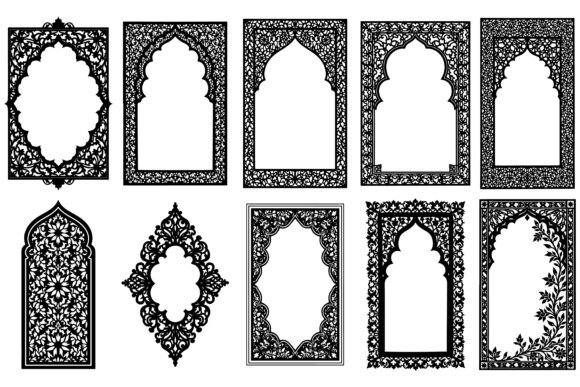
Islamic Laser Cut Vector Art Designs: A Comprehensive Guide to Formats, Applications, and Selection
The intersection of traditional Islamic artistry and modern digital fabrication has given rise to a highly specialized niche: Islamic Laser Cut Vector Art Designs. For artisans, designers, and event planners, these digital assets serve as the bridge between intricate historical aesthetics and precise contemporary manufacturing. Unlike standard clip art, these designs are engineered for specificity, ensuring that the complex geometric interlacing, arabesque flows, and calligraphic nuances translate flawlessly from screen to physical material.
Selecting the right vector resources requires more than just aesthetic preference; it demands an understanding of file compatibility, material constraints, and intended application. Whether you are producing high-volume wedding invitations or custom mosque signage, the distinction between a generic image and a production-ready vector template can determine the success of your project. This guide explores the utility, formats, and strategic applications of Islamic laser cut vectors to help you make informed decisions.
Understanding the Core Format: EPS, JPG, and PNG
The efficacy of any laser cutting project begins with the source file. While visual appeal is paramount, the technical structure of the file dictates how the machine interprets the design. The three primary formats associated with Islamic Laser Cut Vector Art Designs—EPS, JPG, and PNG—serve distinct roles in the workflow.
- EPS (Encapsulated PostScript): This is the gold standard for professional laser cutting. EPS files contain mathematical data rather than pixel grids, allowing for infinite scalability without loss of quality. When using Geometric Islamic Patterns or Intricate Islamic Vectors, EPS ensures that every hairline cut remains crisp, regardless of whether the final piece is 6 inches or 6 feet wide. It is the preferred choice for CNC routers and CO2 lasers that require precise path data.
- PNG (Portable Network Graphics): PNGs are raster images with transparent backgrounds. They are excellent for quick prototyping or when the laser cutter supports bitmap tracing. However, they lack the editability of vectors. If you need to adjust the spacing of an Islamic Mandala Vector or modify the thickness of a line, a PNG will force you to recreate the work. They are best suited for smaller, less complex projects where editing is not required.
- JPG (Joint Photographic Experts Group): Similar to PNGs but typically compressed and lacking transparency support, JPGs are generally the least desirable format for laser cutting. Compression artifacts can introduce noise into the design, leading to jagged edges on delicate Arabesque Laser Cut Designs. Use this format only if no other option is available and the design is simple enough to tolerate minor imperfections.
Strategic Applications Across Industries
The versatility of Laser Cut Islamic Templates allows them to be deployed across a wide spectrum of industries. Understanding these use cases helps in evaluating which design complexity and file type best suit your specific needs.
Architectural and Home Decor Integration
One of the most prominent uses for Mosque Laser Cut Patterns is in interior architecture. Wall panels, room dividers, and decorative screens made from wood, acrylic, or metal benefit immensely from the precision of vector art. The repetitive nature of Traditional Islamic Patterns creates a mesmerizing play of light and shadow, making them ideal for Islamic Wall Decor Vectors. In this context, the durability of the material often outweighs the intricacy of the cut; however, for high-end residential accents, Intricate Islamic Vectors allow for finer detail that adds luxury to the space.
Event Planning and Religious Celebrations
For events such as Eid, Ramadan, or weddings, Laser Cut Eid Decorations provide a customizable alternative to mass-produced store items. Eid Mubarak Laser Cut Templates can be used to create elaborate backdrops, table centerpieces, and hanging installations. The ability to personalize these designs means that organizers can incorporate specific names, dates, or Quranic verses directly into the Arabic Laser Cut Designs. The trade-off here is time; while laser cutting offers uniqueness, it is slower than printing, requiring careful planning for large-scale events.
Fashion and Wearable Art
The application of Islamic Graphic Templates extends beyond rigid materials. Designers are increasingly using vector patterns to create stencils for fabric cutting or to design jewelry components. Islamic Wedding Decor Vectors often feature delicate filigree that translates well into metal jewelry or lace-like fabric overlays. The key consideration in fashion is the scale; what works as a wall panel may become cluttered or fragile when reduced to the size of a brooch or scarf pattern.
Stationery and Digital Media
In the realm of stationery, Islamic Calligraphy Vector Art is frequently used for greeting cards, invitations, and book covers. While the final product is printed, having the vector source allows for high-resolution output without pixelation. Furthermore, Digital Use cases, such as website headers or app icons, rely on the scalability of these vectors. A Modern Islamic Laser Cut Designs asset can be rendered flat for web use or extruded for 3D modeling, offering dual utility for digital designers.
Comparing Approaches: Vector vs. Raster vs. Hand-Crafted
When deciding on a production method, it is crucial to compare vector-based laser cutting against alternatives. This comparison highlights why Islamic Laser Cut Designs have gained such traction among professionals.
Vector vs. Raster Engraving: Many hobbyists confuse cutting with engraving. Raster engraving etches the surface, similar to a printer, whereas vector cutting severs the material entirely. For Decorative Islamic Art that requires negative space—such as a lattice screen—vector cutting is mandatory. Raster methods cannot remove material to create open spaces efficiently. Therefore, if your project involves creating a physical opening or silhouette, vector files are non-negotiable.
Digital Fabrication vs. Hand-Craftsmanship: Traditional hand-carving of wood or plaster is a revered skill, producing unique textures and organic variations. However, it is labor-intensive and expensive. Islamic Art for Laser Cutting offers consistency and speed. If you need fifty identical pieces for a conference giveaway, laser-cut vectors are the only viable option. Conversely, for a one-of-a-kind museum piece, hand-crafting may hold more cultural and artistic value. The decision hinges on volume versus uniqueness.
Pre-made Templates vs. Custom Design: Purchasing pre-made Laser Cut Mosque Designs is cost-effective and immediate. These libraries often include tested parameters for common materials like basswood or acrylic. However, they lack originality. Commissioning a custom designer allows for Personalized Islamic art pieces tailored to specific brand identities or personal tastes. The tradeoff is cost and lead time. For most small businesses and individual creators, a hybrid approach—modifying existing templates—is often the most practical solution.
Educational and Cultural Utility
Beyond commercial applications, Islamic Laser Cut Vector Art Designs serve a significant role in education. Teachers and cultural institutions use these resources to teach students about geometry, symmetry, and Islamic history. By providing students with Islamic Ornament Designs as digital files, educators can demonstrate how ancient mathematical principles underpin beautiful art. Students can then use school laser cutters to produce their own models, bridging the gap between theoretical knowledge and tangible creation. This hands-on approach reinforces learning in STEM fields through the lens of cultural heritage.
Decision Factors for Buyers and Creators
To ensure you select the right resources, consider the following factors before purchasing or downloading Islamic Laser Cut Templates:
- Material Compatibility: Ensure the vector lines are closed paths. Open lines can cause laser cutters to skip cuts or burn unevenly. Check that the design density matches your material’s thickness; overly dense patterns may weaken thin acrylic or cause excessive charring in wood.
- Scalability Needs: If you plan to scale the design significantly, EPS is essential. If you are printing at a fixed size, high-resolution PNGs may suffice.
- Complexity Level: Evaluate the tooling radius of your laser. Extremely fine details in Quranic Laser Cut Art might be lost if the laser spot size is too large relative to the design elements. Always test a small section before committing to a full production run.
- Commercial Rights: Verify the licensing terms. Some Islamic Border and... related assets may be restricted to personal use only. If you intend to sell products featuring these designs, ensure you have the appropriate commercial license to avoid legal issues.
In conclusion, Islamic Laser Cut Vector Art Designs represent a powerful convergence of technology and tradition. By understanding the nuances of file formats, application contexts, and comparative advantages, creators can leverage these assets to produce high-quality, culturally resonant works. Whether for home decor, religious celebrations, or educational purposes, the right vector resource enables precision, efficiency, and artistic expression that honors the rich legacy of Islamic art while embracing modern innovation.